5 snatch variations that greatly improve your snatch
Incorporating snatch variations into your training can be very beneficial for you snatch technique in the long run. In this article I will discuss 5 different snatch variations that will greatly help you improve your snatch ability.
Snatch variations from the blocks
Snatching from the blocks is nothing new. It is a great way to practise technique because it makes snatching (for most people) a littlebit easier. For example, by lifting from above knee height you don’t have to pass the knees, which is an advantage because many lifters have problems keeping the bar close when passing the knees. Nevertheless a lot of people are not using blocks nearly enough.
Blocks have standard heights (15/30/38 cm ) and we distinguish between low, mid and high blocks. These three heights are aimed at creating 3 different start positions. Since not every lifter has the same height, the blocks should be adapted to every lifter’s specific needs. Low blocks (15cm) should should make the lifter start from below the knees. Mid blocks (30cm) should make the lifter start from the middle of the knee(cap). High blocks (38cm) should make the lifter start from the middle of the thigh.
In general blocks should be used at least 1 out of every 3 training weeks.
Snatching from the hang
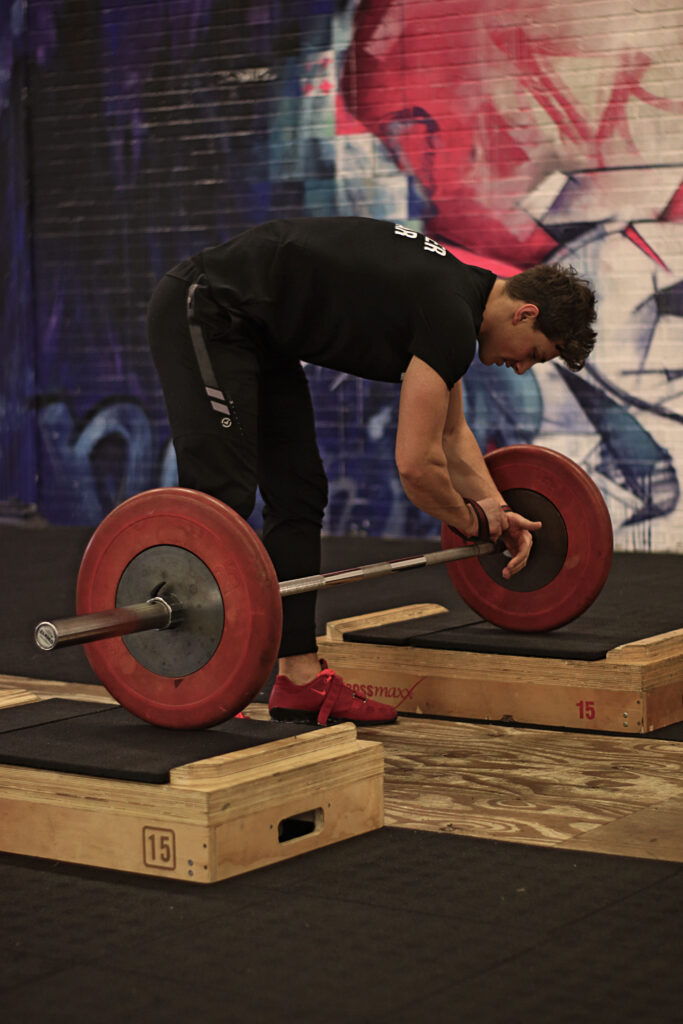
Hangsnatches are similar to block snatchces in that it makes the lifter not start the actual lift from the floor. Snatch variations from the hang differ from the blocks in that the lifter has to start the set from the floor and bring the barbell to the middle before actually lowering it down to the starting position. Besides that, the lifter is already actively holding the bar whereas from the blocks the lifter starts without having that body tension beforehand. Thereby the block snatch is more similar to the lift from the floor in terms of starting the lift.
Hang snatches are usually done from three positions: High/mid/low hang. The high hang snatch starts from the middle of the thighs, the mid hang starts from the knee (caps) and the low hang starts well below the knee (the barbell should be hovering above the floor with a 1-2 cm margin.
Hang snatches make the lifter train the bar trajectory in two ways (both up and down) and therefore are very good at practising keeping the bar close to the body. Furthermore the lifter has a lot of time under tension which greatly strenghtens the back and trains the right positions and angles the lifter needs to have when performing the snatch.
To keep it interesting and make it more challenging you could combine multiple hang snatch variations to make a hang-snatch complex. For example:
High hang snatch + Mid hang snatch + Low hang snatch
Snatch with a stop built in
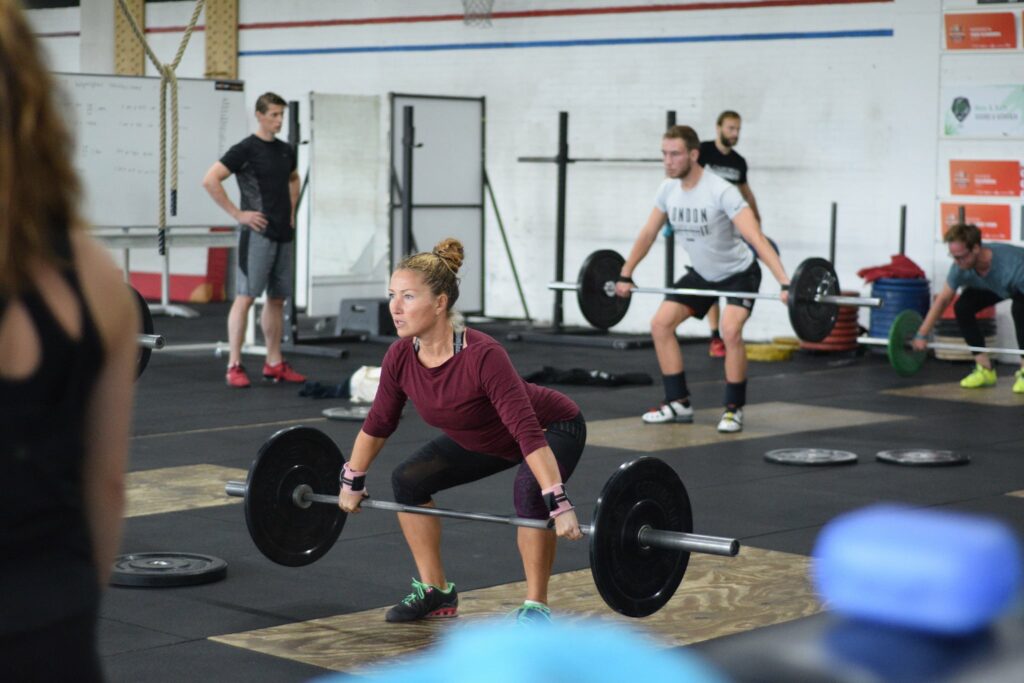
Snatch variations with a stop means that when you lift the barbell you will stop moving the barbell at a certain height. Stopping usually is done at the same positions that you perform hang snatches at. For example: Snatch with a 1 second stop at the knee. The lifter lifts the barbell as usual and when the barbell reaches knee height the lifter stops for a brief moment (1 second) and then continues the lift as normal.
Using a stop fortifies the position that is used to stop at. It is also a good way to check whether the lifter remains proper positions and body balance throughout the lift.
Combine multiple stops (after lift off, att or below the knee, mid thigh, in the hip) or vary in the time spent at the stopping position (1-3 seconds) to change things up.
Muscle snatch variations
The muscle snatch is a snatch variation that is more difficult than it looks. By performing a muscle snatch the lifter does not get under the bar, but instead stands up tall when finishing the lift. It is a good exercise to practise utilizing a vertical hip extension, keeping a straight bar path and working on a quick elbow turnover.
When you are just starting to incorporate muscle snatches into your training, the hang-musclesnatch variations att or above the knee are a good way to start. Since you don’t have to pass the knee these variations are a bit easier. As you get better you can progress to muscle snatches below the knee or muscle snatches from the ground.
Muscle snatch variations are great to use in your warm-ups. For example: 3 sets of 3 reps with an empty bar from multiple positions (high/mid/low hang). This is a good way to prime your snatch session and work on lifting with proper snatch technique.
No feet snatch variations
Snatching without using feet does not mean that you do not use your feet. It actually stands for : Snatching without moving the feet. Because you are not allowed to move the feet you should start this snatch variation in your snatch-catch position. For most people this means a bit wider start position than usual.
What are the benefits of no feet snatching?
Firstly, no feet snatching could correct a lifter who normally loses balance in the pull part. For example a lifter that comes forward on the toes or falls back on the heels in the first pull part of the movement.
Secondly, no feet snatching helps a lifter to focus on keeping pressure on the midfoot throughout the lift. Which is one of the most essential parts of the lift.
Thirdly, it practises staying connected to the barbell when pulling under.
As with most snatch variations, no feet snatches can be performed from the floor, hang or blocks. Changing the starting positions regurarly keeps it interesting and is good for your technical development.
How to apply snatch variations to your training
Snatch variations are great and can even be combined for plenty of snatch variation to your weightlifting training. Don’t try to do them all in the same week but vary a “theme” every week. As a result you keep challenging yourself and makes you focus on the technical elements. If you feel that one of the variations works really well for you, it is smart to incorporate this variation into your warming up so that you are primed for your workout.
End note
These snatch variations work really well to improve your snatch, however don’t neglect snatching from the floor regurarly. Besides from that, not all variations work well for all lifters. Some may benefit a lot from snatching from the blocks, others may favor the hangsnatches. If you don’t know when, where or how to program these variations it is smart to look for a weightlifting coach that can help you program the variations that benefit your style of lifting the best.
If you dont have a program or don’t know where to begin you could try our online coaching plans to get a tailor made program and together with a coach work on your weaknesses.
Good luck and have fun!
Tobias van Leeuwen
GUTBweightlifting